
The UK's First Maternity Adviser. What It Means for Black Mothers.
By Sandra Igwe MBE, Founder and CEO of The Motherhood Group 20 May 2026
When news broke on 19 May 2026 that Michelle Welsh MP had been appointed as the UK government's first ever Maternity Adviser, I felt something I do not always allow myself to feel in this work: genuine hope.
I want to be clear about what I mean by that. I am not someone who is easily moved by titles or announcements. I have been doing this work for over a decade. I have seen reports commissioned, strategies launched, reviews concluded and far too often, I have watched the same inequalities persist for Black mothers, year after year, data point after data point. Hope, in this sector, has to be earned.
But Michelle Welsh is not a stranger to these conversations. And that matters.
She showed up before it was her job
What I respect most about Michelle's appointment is not just the role itself. It is the record she brings to it. As Chair of the All-Party Parliamentary Group for Maternity, she has given years to understanding the failures in our maternity system. She has spoken to thousands of women. She has been a parliamentary voices calling for accountability, for safer staffing, for listening to women, and critically, for addressing the disproportionate harm experienced by Black and ethnic minority mothers.
But I also know this from our own relationship with her work. Michelle has engaged with The Motherhood Group on three separate occasions over the years.
1. Black Maternal Mental Health Week: Mental Health and Digital Support Webinar This session explored how Black mothers can better access mental health and digital support tools during and after pregnancy, and why the current system so routinely fails them.
2. Breaking Cultural Barriers: Webinar with Lewisham and Greenwich NHS Trust A frank conversation on dismantling structural inequalities in NHS maternity and perinatal mental health services for Black and ethnic minority communities, including the role of NHS Trusts in driving cultural change.
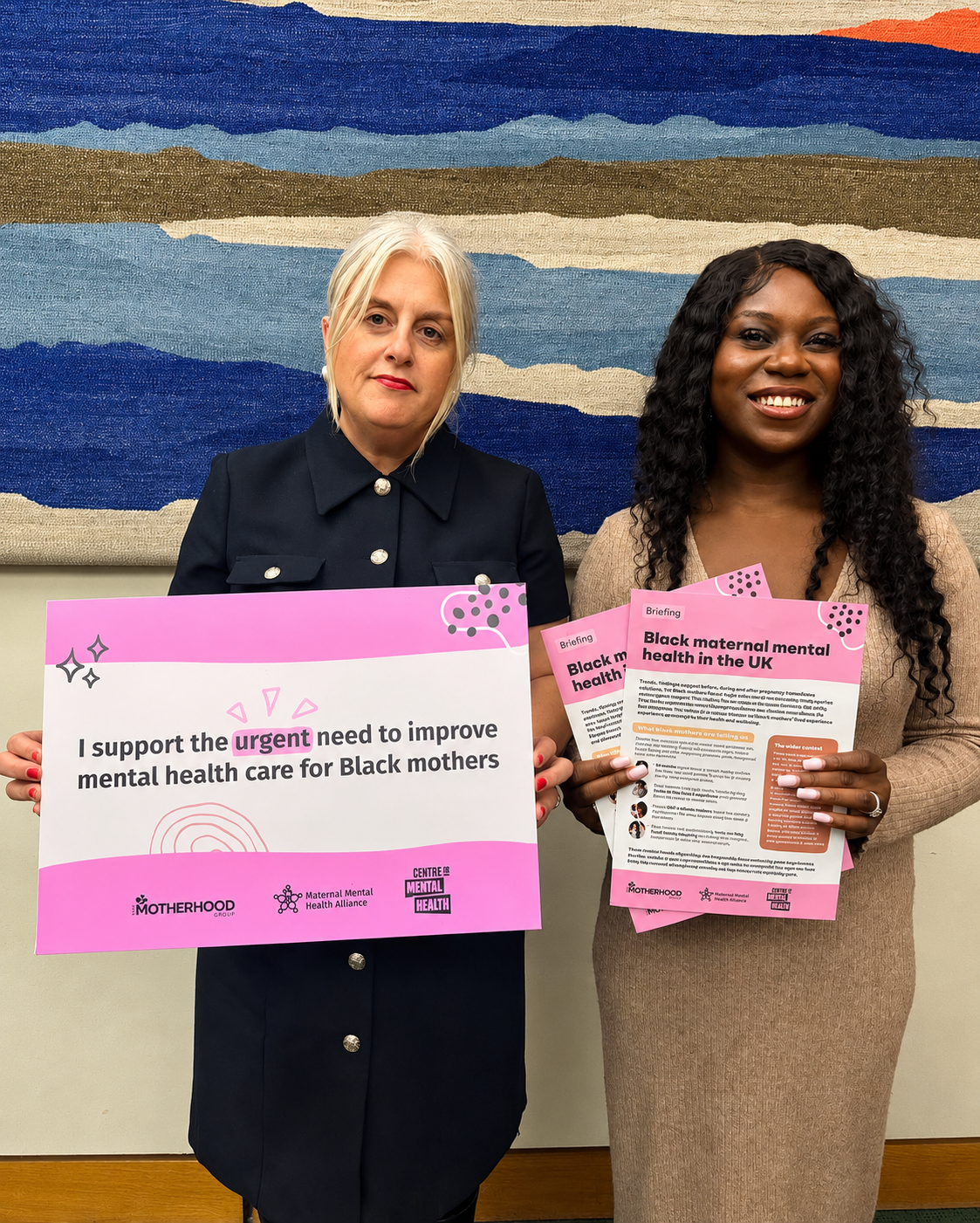
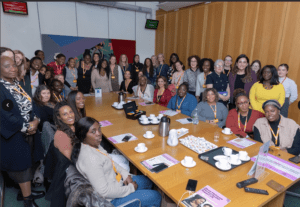
3. Parliamentary Drop-In on Black Maternal Mental Health Co-hosted with the Maternal Mental Health Alliance and the Centre for Mental Health. MPs heard directly from Black mothers with lived experience and were asked to commit to clear calls to action from The Motherhood Group's Black Maternal Mental Health report.
She came. She listened. She engaged with the evidence and with the real women behind it. For an MP with an already full portfolio, that is not nothing. That is a choice, and it says something about where her values lie.

The numbers that should make us all uncomfortable
I share data about Black maternal health outcomes often. I do it because I believe facts need to be repeated until they become impossible to ignore. But I also want to be honest: behind every statistic is a woman. A family. A story that should never have ended the way it did.
Black women in the UK are 3.7 times more likely to die during pregnancy or childbirth than White women. Women of Mixed ethnicity are 1.8 times more likely. 1 in 4 women experience perinatal mental health problems, and Black women face higher rates of severe outcomes within that group. These figures come from MBRRACE-UK and NHS England, and they have not shifted fast enough.
These are not new numbers. They have been in reports, in evidence sessions, in parliamentary debates, for years. What has been missing is not awareness. It is accountability and sustained structural action. A Maternity Adviser with a clear mandate and direct access to ministers could, if used well, be the mechanism that finally closes the gap between what we know and what we do.
As James Murray MP, Secretary of State for Health and Social Care, said on Michelle's appointment: "Far too many women and families have been let down by maternity services, and that must change."
I agree with those words. But I also want to say clearly: those of us who have been doing this work in communities, in clinics, in churches, in WhatsApp groups and conference rooms, we are watching. We will hold this appointment to its promise. Not out of cynicism, but because Black mothers deserve nothing less than follow-through.
What this could mean, if we get it right
Michelle Welsh's appointment comes with a specific and explicit brief to close the inequalities that leave Black and ethnic minority women significantly more likely to die in pregnancy and childbirth. Her role gives her a seat at the table with ministers, a connection to the National Maternity and Neonatal Taskforce, and a platform to bring community voices into the heart of government decision-making.
That last part matters most to me. For too long, Black mothers have been case studies in other people's reports. We have been cited as evidence of failure without being treated as architects of change. If this role is done well, if it is done with genuine co-production, genuine power-sharing, and genuine investment in community-led models, it could look very different from what has come before.
Here is what I need to see.
Meaningful community engagement
Not consultations that produce documents that sit on shelves. Real, ongoing, funded partnerships with Black-led organisations that are already doing this work, already trusted by the communities most affected, already holding the evidence, already running the programmes that the NHS is not reaching. The Motherhood Group is one of them. We are not alone.
Accountability with teeth
Clear metrics. Published data on outcomes for Black and ethnic minority mothers, disaggregated, transparent, and reviewed regularly. Consequences when NHS Trusts fail to meet standards, not just recommendations, but real mechanisms for change. Black mothers have been patient long enough.
Investment in culturally competent care
Culturally competent care is not a luxury. It is not a nice-to-have. It is the difference between a Black woman feeling safe enough to seek help and her suffering in silence, or worse, receiving care that dismisses or harms her. Community-based, peer-led, trauma-informed support needs sustainable funding, not grants that last twelve months and then disappear.
Digital innovation that reaches the most marginalised
As the Founder of Mumbrite, a digital maternal health platform built specifically for Black mothers, I know first-hand that technology can be a powerful equaliser or another barrier. As the government considers digital health infrastructure, the voices of Black mothers must shape what gets built and how it gets funded.
As Michelle herself said on her appointment: "This is about rebuilding trust and creating a maternity system that is not only safer, but kinder too."
I want to believe those words. And I want to help make them real.
A personal note
I started The Motherhood Group because I needed it to exist. I became an advocate because the system failed women I knew, and because I refused to accept that as inevitable. Every year that I have continued this work, the data has told the same story: Black mothers are more likely to die, more likely to be dismissed, and less likely to access the care they need.
Michelle Welsh is a harmed mother herself. She knows what it means to come through childbirth carrying scars the system caused. That lived experience in this role, not just advised by those who have been harmed but held by someone who has been harmed, is significant.
I am looking forward to working with Michelle in her new role. We have not yet had a formal conversation, but our paths have been moving in the same direction for years. It is time we sat down together.
The appointment is made. The mandate is set. The inequalities are documented. Now the work begins, and Black mothers are watching.
Sandra Igwe MBE is the Founder and CEO of The Motherhood Group and the Founder of Mumbrite, Black Maternal Mental Health Week, and the Black Maternal Health Conference. She is the author of My Black Motherhood: Mental Health, Racism, Stigma and the System.
www.themotherhoodgroup.org @themotherhoodgroup


