Commissioned by Genomics England to understand Black mother’s hopes and fears to a national pilot.
A pilot study
The Motherhood Group was commissioned by Genomics England to understand Black mother’s responses to a pilot study seeking to identify rare genetic conditions in babies and monitor these conditions throughout the child’s life.
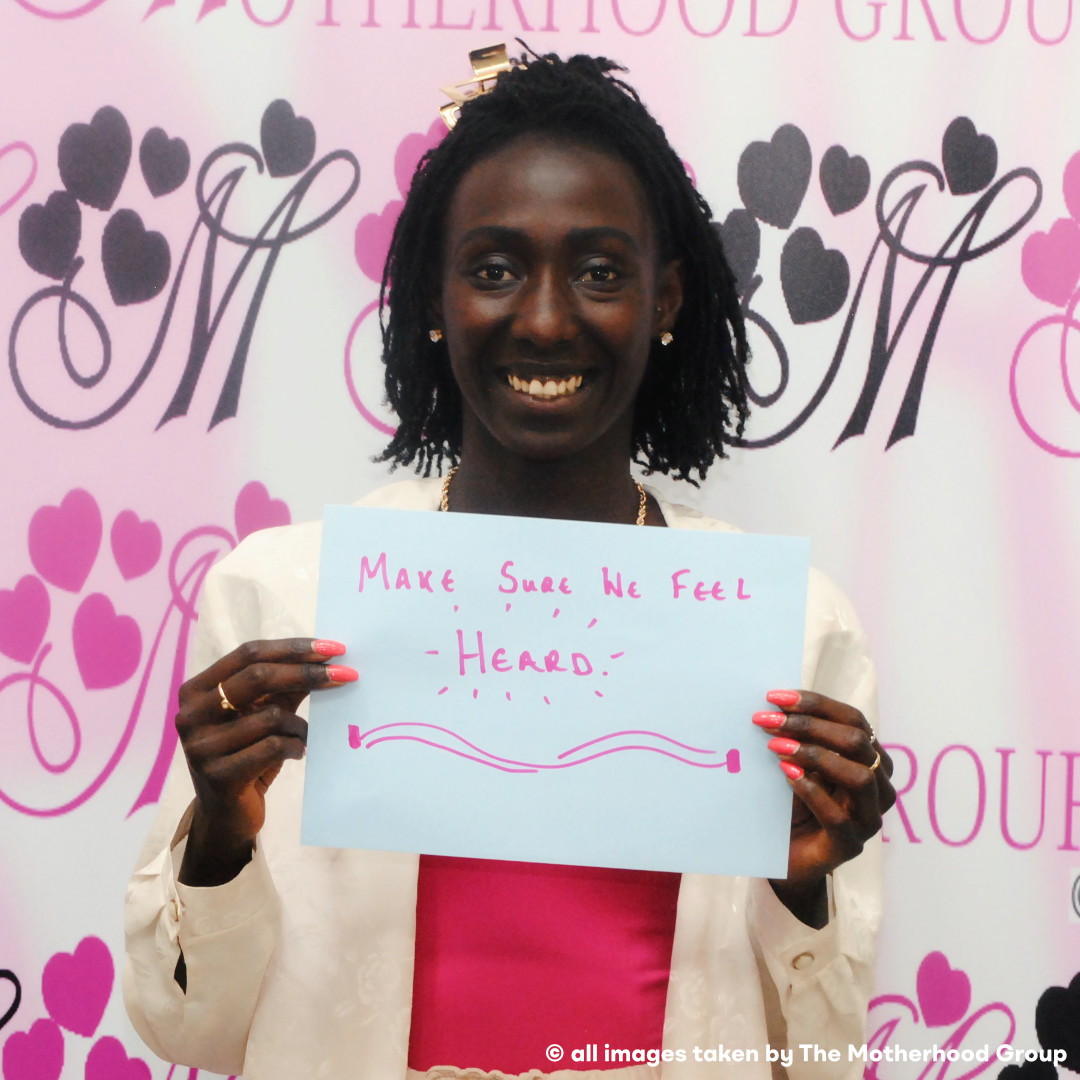
The workshop facilitated an understanding of the hopes and fears Black mothers associate with the research project. Mothers watched a short video provided by Genomics England and heard about the study from the facilitator, Sandra Igwe, accompanied by two representatives from Genomics England. After discussing the study and video thoroughly, the workshop progressed to exploring influences on decision-making when considering participation in the study. Participants were encouraged to co-design materials for engagement and recruitment for the Genomics England study, informed by prior discussion and making use of both in-person and online media.
The video provided by Genomics England was paused at pre-agreed intervals. During these intervals, participants could ask questions about the information provided and share their thoughts, offering insights into their hopes and fears and allowing collaborative exploration of the emerging themes. Six A3 stills of the video were attached to a wall where participants could place post-it notes with their thoughts. The following prompts were provided:
What types of stories/myths come to mind?
What are the barriers to taking part?
What are your hopes for your children if they were part of the programme?
Do you hope this programme can help with any specific conditions or inequalities? Which ones?
How do you see yourself served and represented by this programme?
Group Discussion: Messaging After the video and discussion, the following questions regarding messaging in the video and brochure, alongside further information provided, were presented to participants:
What do you need to know?
What vocabulary resonates/does not resonate?
Where should this show up, and from whom?
What might sway your decision to take part?
What hopes and fears about this study come up in the community context?
- How might these be alleviated?
What formats (and messages) would be most appropriate or successful in helping mums involve their partners, friends and family in deciding to take part?
Overall, primary fears about participation included fear of physical or psychological harm to mother or child, information overload and issues of consent, and anxieties over the promise of continued support if a mother’s child was diagnosed with a genetic illness or condition. However, participants also had hope that the study might influence the future of medicine, creating a better world for their children and children’s children, even if they did not see results in their own lifetimes. This was influenced by the ability of the study to identify lifelong conditions. The identification of lifelong conditions was related to those which might specifically or disproportionately affect Black communities, or those which might cause higher levels of anxiety about a potential diagnosis for Black people, such as Sickle Cell.