



Your experience can shape research
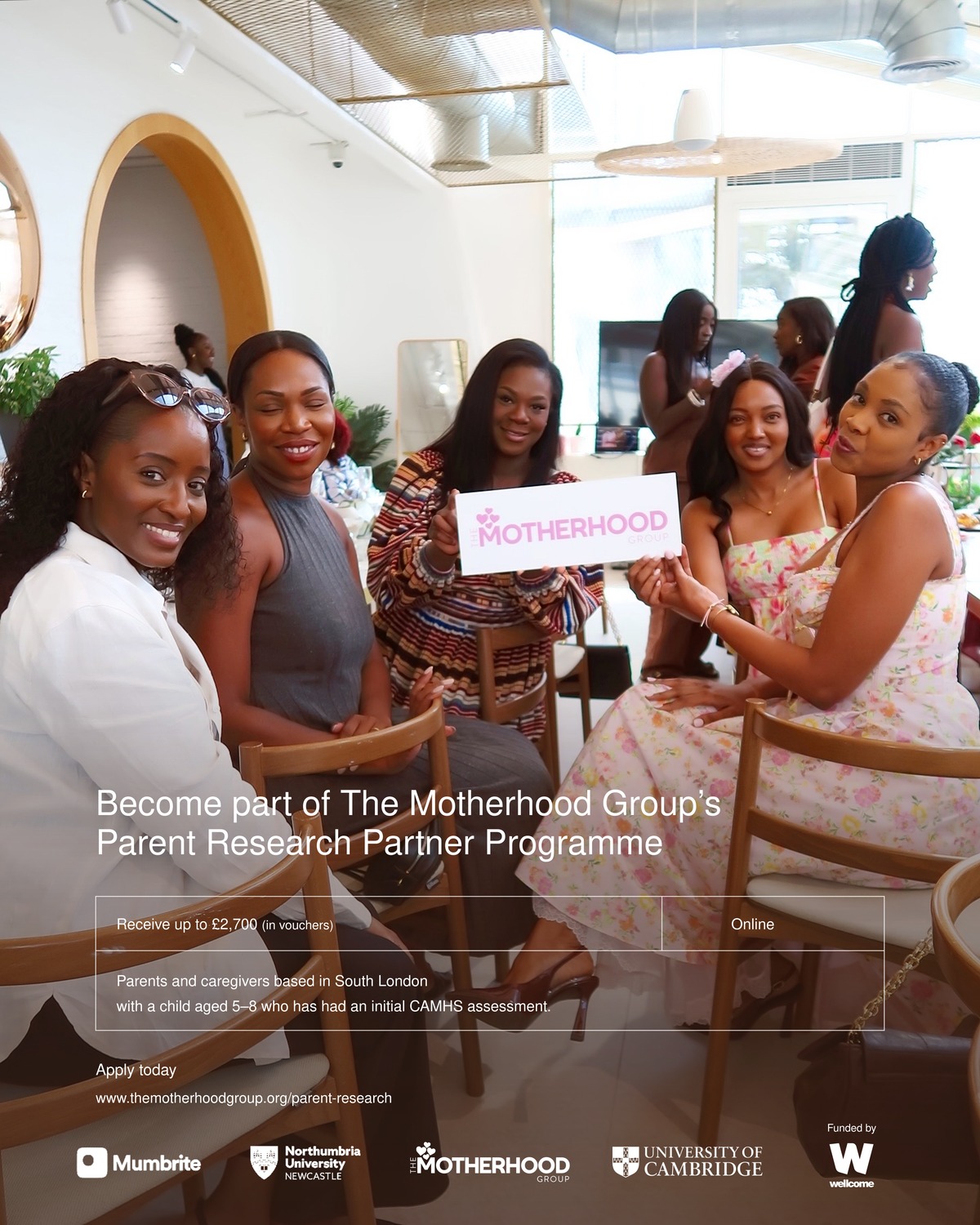
A paid opportunity for six South London parents and main caregivers to help make research about children and families fairer, safer and more useful.
We welcome mothers, fathers and other caregivers with a child aged 5–8 who has had an initial CAMHS assessment. No academic or research experience is needed. Your experience as a parent is the expertise we are looking for.
About the research
Attachment describes the relationship between children and the people who care for them. Professionals sometimes use attachment assessments in children’s mental health services, but we do not know enough about how well or how fairly different assessments work.
The research study is called MASON: Measures of Attachment: Signal or Noise? It compares different attachment assessments and explores whether they provide information that is useful for families and practitioners.
Working with the University of Cambridge and Northumbria University, our Parent Research Partners will help the team understand how assessments may feel to parents and children, and how research can be clearer, more respectful and more inclusive.
What you would do
You will be able to see how your contributions influence decisions, materials and the way findings are communicated.




Who can apply?
You can apply if you:
Your child does not need to be receiving ongoing CAMHS support. It is fine if you also have children who are younger or older.
Waiting for an assessment or unsure? You can still submit your interest below. The team will review your answers against the study criteria before confirming a place.
We are recruiting six parents and caregivers, including at least two fathers and at least two parents of neurodivergent children. We welcome different ethnicities, family circumstances and backgrounds.
You do not need to know about attachment theory or research. We are looking for people who can reflect honestly, listen to others and help make the work more useful for families.
This is a dedicated research partner programme connected to our advisory and ambassador work. Fathers and non-Black caregivers are full and equal members of this research group. Joining does not automatically give membership of our separate Mums Advisory Board or Ambassador Programme.
Getting started
Our first meetings run weekly on Fridays, from 12–1pm UK time on Zoom.
After this first block, meetings are spaced around key stages of the research through to late 2030. There will be busier periods and longer gaps. We will give at least two weeks’ notice of meeting dates.
There are 18 paid opportunities to contribute from late 2026 to late 2030. Each involves a one-hour Zoom meeting and up to two additional hours for preparation or follow-up, such as reading something before the meeting or sharing further thoughts afterwards.
We understand that family life, work, health and caring responsibilities can change. Where possible, missing a group meeting will not automatically mean losing the opportunity to contribute. An individual online catch-up or another agreed way to give feedback may be offered.
You will receive £150 in vouchers for each completed contribution, including a one-hour Zoom meeting. This gives a potential total of £2,700 across 18 contributions. The amount you receive depends on the contributions you complete; payment is in vouchers.
There will also be one optional in-person celebration or reflection session later in the project. If you choose to attend, agreed travel, childcare and accessibility costs will be covered separately, with food and drink provided. These costs will not reduce your contribution payments.
Research about children and families can affect how services are delivered. Attachment research has sometimes been misunderstood or used in ways families have found unfair or unhelpful. We want this research to be carried out with families.
You will help the team consider whether information makes sense to parents, whether something could leave a family feeling judged or blamed, what we may have overlooked, and how findings could be misunderstood or misused. Your views may change how we undertake the research, communicate with families, interpret their experiences and share findings.
You will receive an introduction to the project, clear explanations and opportunities to ask questions before being asked for your views. You do not need academic experience. Support and guidance will be provided throughout your involvement.
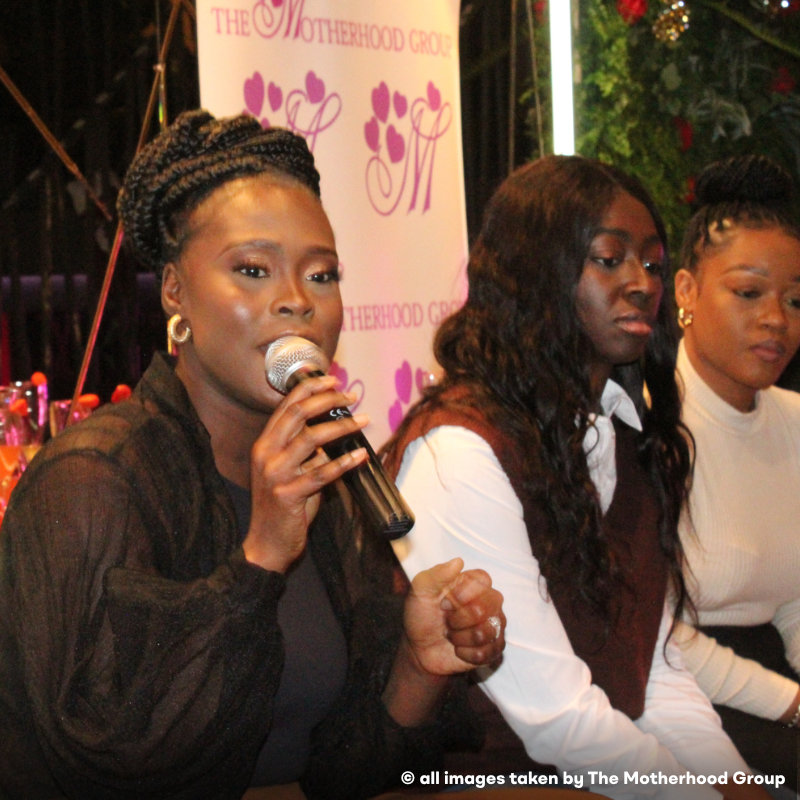
The programme is co-led by Sandra Igwe MBE from The Motherhood Group and Sarah Foster from Northumbria University, with research assistant Sonia supporting the sessions. Robbie Duschinsky at the University of Cambridge supports planning and debriefing.
This short form is an expression of interest. The Motherhood Group will review eligibility, availability and the range of experiences across the group, then contact applicants by email. Submitting the form does not guarantee a place.
We will use your answers to assess your application and contact you about this programme. Please do not include your child’s name, medical records or detailed clinical information. Any neurodivergence information is optional. Please read our privacy policy before applying.
Questions or need help applying? Email info@themotherhoodgroup.com.
A short expression of interest
A few sentences are enough. The form asks about your parenting role, borough, your child’s age and initial CAMHS assessment, and your availability. Please read the programme information above before applying.
First sessions: 13/11/2026, 20/11/2026, 27/11/2026 and 04/12/2026, from 12–1pm UK time on Zoom. If you cannot attend every date, you can tell us in the form.
We will email you to confirm receipt and contact you about the next steps.
Your answers are used for this programme’s recruitment. You will not be signed up to marketing by applying. Please read our privacy policy. A place is confirmed separately after selection.


