

For years, Black mothers have spoken about not being heard, not being believed, and not being supported in the moments that matter most.
This month in Parliament, something powerful happened. Decision makers, policymakers, healthcare leaders, and mothers with lived experience finally came together around one table to listen — and act.
The Black Maternal Mental Health Report, led by The Motherhood Group in partnership with the Maternal Mental Health Alliance (MMHA) and the Centre for Mental Health, was launched inside the House of Commons during a landmark parliamentary event. The session was not just another conversation about disparities in maternal health. It was about implementation, accountability, and action.
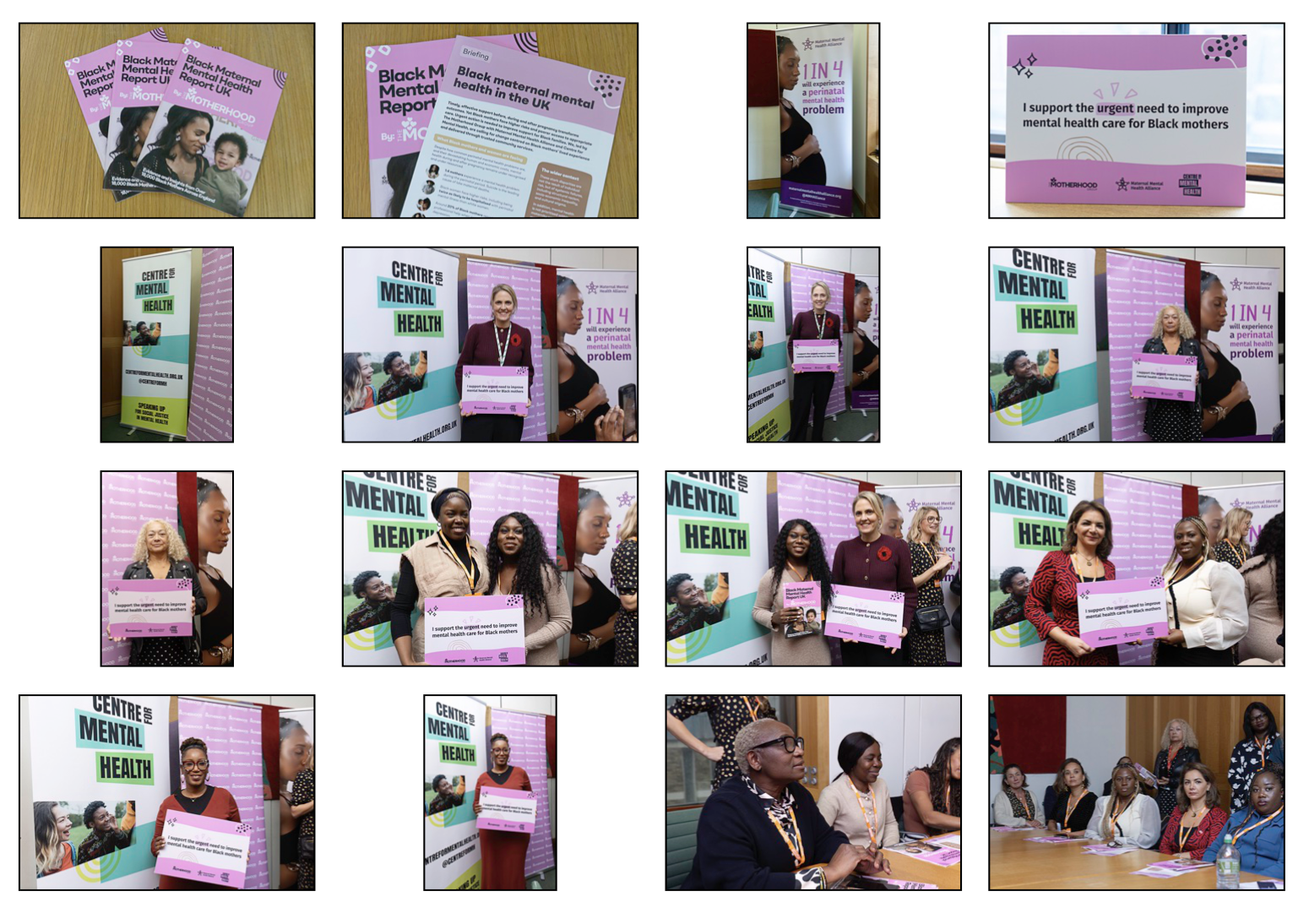
The room was filled with energy and urgency.
We heard powerful contributions from Baroness Luciana Berger, Baroness Gillian Merron, Abena Oppong-Asare MP, Paulette Hamilton MP, Dr Stacy Moore CPsychol, and Maela, alongside charity leaders, policymakers, and mothers who shared their lived experience with raw honesty and courage.
For far too long, the data has told the same story — that Black women face higher risks of poor mental health outcomes during and after pregnancy and struggle to access culturally safe, timely, and trauma-informed care. But the call from Parliament was clear: it is time to move from evidence to implementation.

The Black Maternal Mental Health Report sets out five clear actions that can transform care and save lives:
Click here to download the Black Maternal Health Report
The event was also supported by Members of Parliament and Peers who pledged their commitment to improving outcomes for Black mothers, including Laura Kyrke-Smith MP, Sharon Hodgson MP, Helen Hayes, Alicia Burnett, Trish Balusa Noon Bilal, and Janet Fyle MBE Dr (H.C).
Each of these voices plays an essential role in turning awareness into long-term structural change.
For nearly a decade, The Motherhood Group has listened to thousands of Black mothers through workshops, peer-support programmes, and community events.
Their experiences, both painful and hopeful, form the foundation of this report.
This moment was not about statistics. It was about stories.
It was about the mothers who have carried their trauma in silence and the communities that have built support networks when systems have fallen short.
As was shared during the event:
“For far too long, we’ve seen report after report. The evidence is clear — now it’s time for action. Too many Black mothers are suffering when we should be standing beside them, driving change that saves lives.”

This event was not the end of the conversation — it was the beginning of the next chapter.
The Motherhood Group will continue working alongside the Maternal Mental Health Alliance, the Centre for Mental Health, and our partners across the NHS, government, and community sectors to ensure these recommendations become reality.
Because every mother deserves to be seen, heard, and supported to thrive.


