
What Black Maternal Health Awareness Week Demands of All of Us By Sandra Igwe MBE, Founder & Chief Executive, The Motherhood Group
I did not set out to become a maternal health advocate. I became one because I had no choice. Like so many Black women, I experienced a maternity system that was not designed with me in mind. I experienced being dismissed. I experienced having to fight to be heard in spaces where I should have felt held. And when I looked around for community, for information, for someone who looked like me and understood what I was going through, there was very little there.
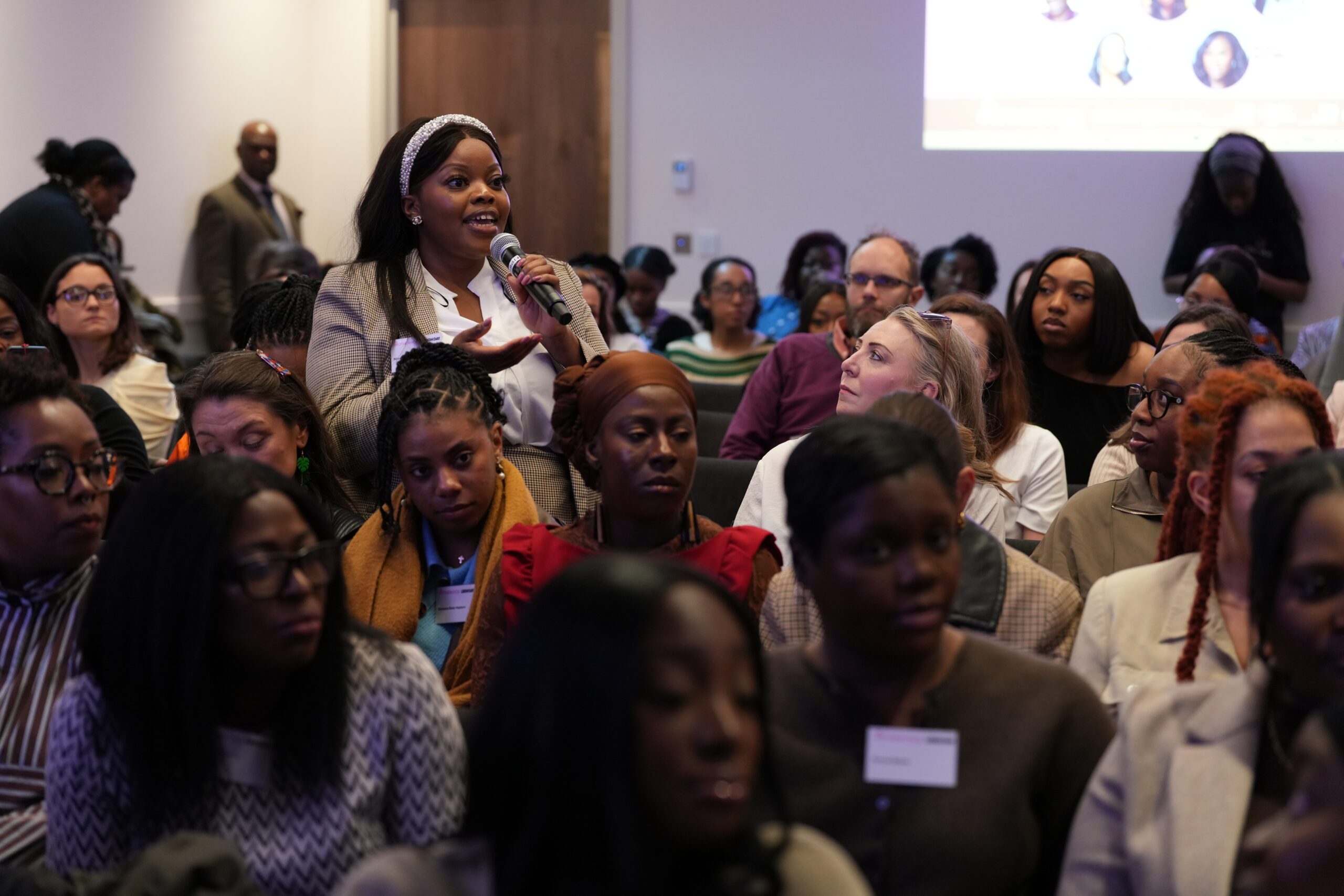
That is why I founded The Motherhood Group in 2016. Nearly a decade later, we have supported over 18,000 Black and Global Majority mothers, trained more than 2,000 healthcare professionals, established Black Maternal Mental Health Week UK, and convened the Black Maternal Health Conference with over 700 attendees, 48 speakers, and 30 partner organisations. We built Mumbrite, a digital maternal health platform, because the gap between what Black women need and what the system provides is still wide enough to be fatal.
Black women in the UK are still four times more likely to die in pregnancy and childbirth than white women. That statistic has barely shifted in a decade. It is not a medical mystery. It is a systems failure, and it is one that plays out in clinical rooms every single day.
Black Maternal Health Awareness Week is not a PR moment. It is a reckoning.
Let's Talk About the Strong Black Woman
Before we get into clinical signs and referral pathways, we need to name something that sits underneath all of it: the Strong Black Woman myth.
For generations, Black women have been told, implicitly and explicitly, that they are built differently. That they can handle more. That their pain is manageable. That asking for help is weakness. That speaking up is aggression. This is not a cultural truth. It is a stereotype, and it is one that has been absorbed into healthcare systems in ways that cost lives.
When a Black woman minimises her own symptoms because she has been conditioned to be strong, that is the myth doing damage. When a clinician deprioritises a Black woman's reported pain because of unconscious assumptions about her resilience, that is the myth doing damage inside the system. When a Black mother is discharged too quickly because she presents as composed and coping, that is the myth doing damage at the point of care.
Strength is not the absence of need. Black women deserve to be cared for, not just admired for their endurance. This week, we are actively dismantling the idea that Black women are exceptions to the standards of care that every patient deserves.
5 Reasons Why This Week Matters
For Healthcare Professionals: What to Watch For
Black women present with the same conditions as any patient. The difference is how often those presentations are missed, delayed, or dismissed.
Pre-eclampsia remains one of the leading causes of preventable maternal death, yet Black women are significantly more likely to have warning signs go unrecognised or unacted upon. Persistent headache, visual disturbances, swelling of the face and hands, and upper abdominal pain require urgent response, not reassurance and a scheduled follow-up.
Postpartum haemorrhage risk is elevated in Black women, and unconscious bias around pain tolerance continues to influence how quickly symptoms are escalated. If a Black woman tells you she is in pain, she is in pain. Treat it accordingly.
Maternal mental health is another area where the data is stark and the provision is thin. Black women are more likely to experience postnatal depression and maternal anxiety but less likely to be identified, referred, or supported. Screening tools alone are not enough if a practitioner cannot build the trust required for honest disclosure. Ask differently. Listen longer.
Sepsis, gestational diabetes, and cardiovascular complications all carry heightened risk for Black women. Vigilance must be matched with action, not just documentation.
For Black Women and Birthing People: What You Need to Know
You are entitled to information, to questions, to second opinions, and to be taken seriously. The MBRRACE-UK data is public. The disparities are documented. You do not have to justify your concerns from scratch in every appointment.
Know the warning signs of pre-eclampsia: severe headaches, vision changes, sudden swelling, upper abdominal pain, reduced fetal movement. Do not wait to see if they pass. Go in.
In the postnatal period, the risks do not stop at delivery. The majority of maternal deaths occur in the weeks and months after birth. Monitor yourself. Accept support. If something feels wrong, it is worth checking.
Bring someone with you if you can. A birth partner, a doula, a trusted friend. Their presence is not a challenge to the clinical team; it is part of your care. Mumbrite exists precisely to connect Black and Global Majority mothers with peer support, specialist guidance, and community at every stage of pregnancy and beyond.
And if you are ever made to feel that your concern is an inconvenience, escalate. Ask to speak to a senior clinician. Ask for things to be documented. You have the right to advocate for yourself, loudly if necessary. You are not being difficult. You are being a patient.
5 Ways Disparities Show Up Differently for Black Women (and What We Can Do Better)
Progress is real. But progress is not the same as parity. Here is where the gaps are still showing up, and what closing them actually looks like.
On Communication, Referral, and Escalation
Culturally competent care is not about knowing every cultural tradition. It is about approaching every patient without assumptions about their pain threshold, their compliance, or their capacity to understand. It is about giving the same clinical weight to a Black woman's self-reported symptoms as you would to any other patient's.
Referral pathways must be followed consistently. If escalation criteria are met, they must be acted on regardless of who the patient is. Disparities in outcomes do not happen in a vacuum. They happen in rooms where decisions are made.
We offer training for NHS Trusts and healthcare teams through The Motherhood Group's professional development programmes. If your trust is not yet engaged with culturally competent maternity care training, Black Maternal Health Awareness Week is the right moment to start that conversation.
This week, I want every Black woman who is pregnant, postpartum, or planning a family to know that The Motherhood Group exists for her. And I want every clinician, policymaker, and system leader to know that we are watching, we are documenting, and we are not going anywhere.
Black maternal health is not a niche issue. It is the standard of care the whole system should be held to.


